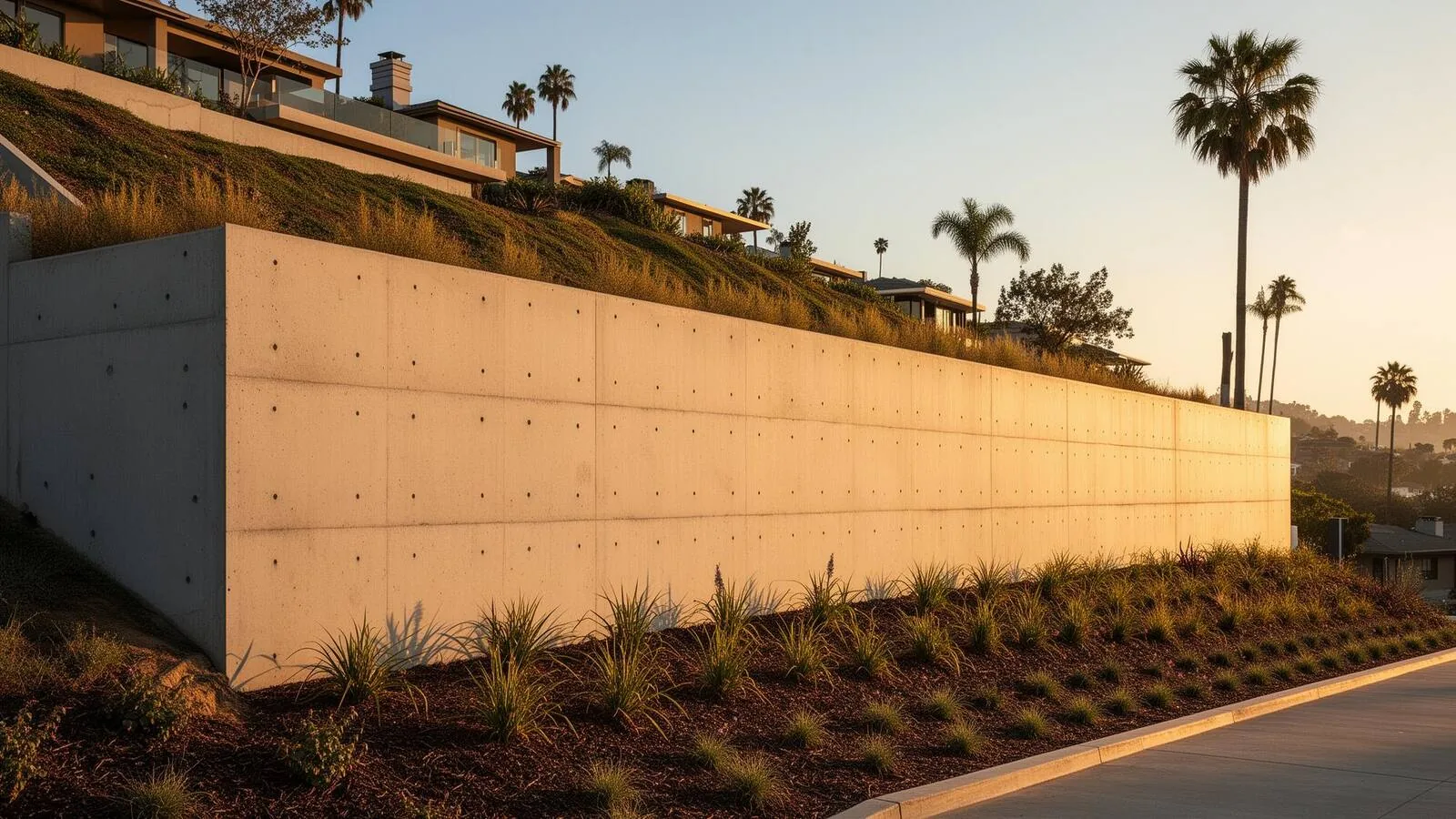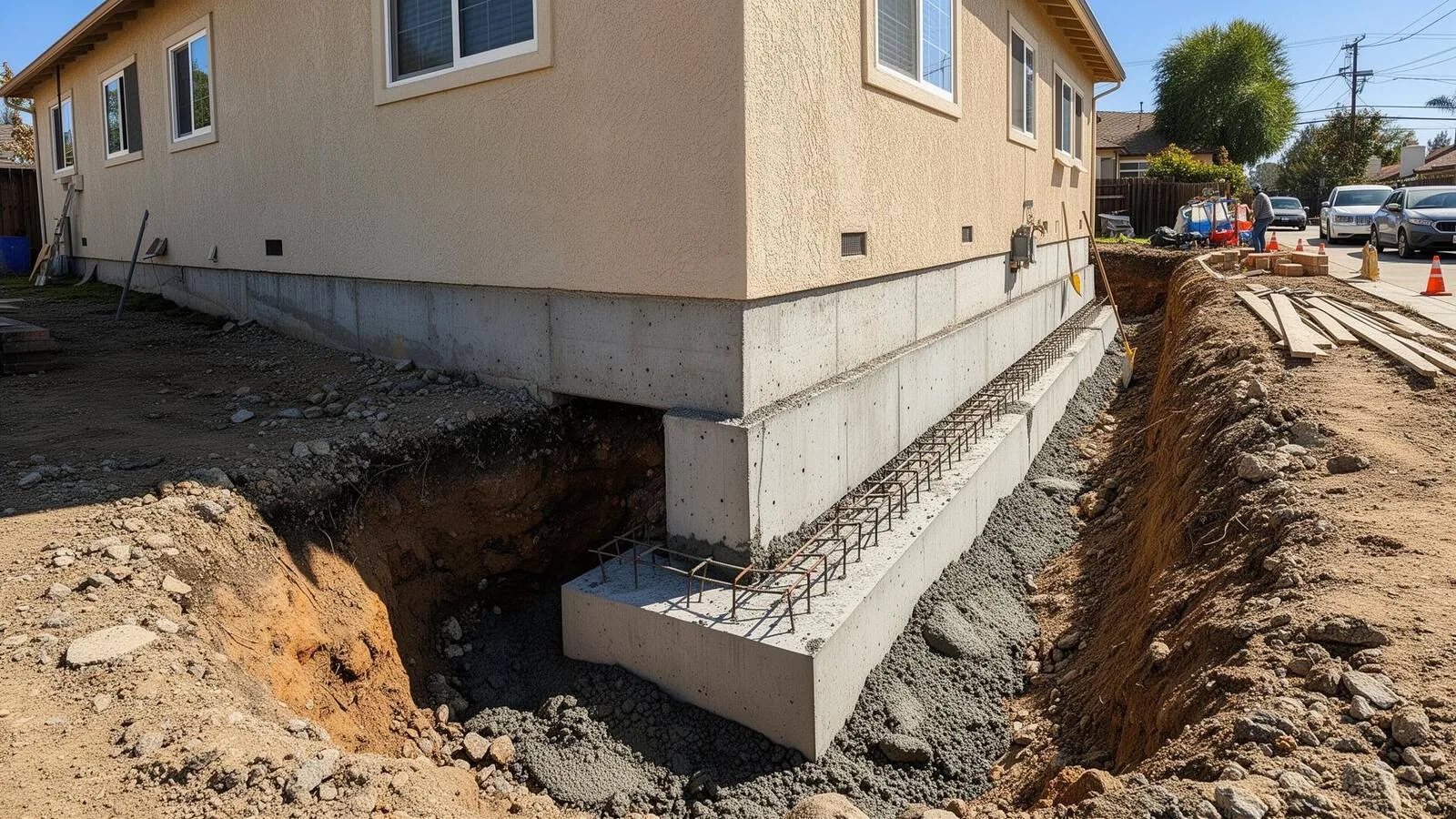
Los Angeles homes are built on a wide range of soils — from sandy coastal flats to expansive clay in the basin and steep hillside lots in canyons and the foothills. Each of these conditions can put stress on a foundation over time.
The good news is that foundation problems almost always announce themselves early. Knowing what to look for can help you act before a minor issue turns into a structural one.
Cracks in foundation walls, slabs, or drywall
Not every crack is serious, but the pattern, width, and location matter. Hairline cracks in stucco or paint are usually cosmetic. Stair-step cracks in block walls, horizontal cracks in stem walls, and diagonal cracks running from the corners of doors and windows are more concerning.
If you can fit a coin into a crack, if it has grown noticeably over a few months, or if it reappears after being patched, it is time for a professional look.
Uneven, sloping, or bouncy floors
Place a level or a small marble on the floor in different rooms. If it consistently rolls in one direction or you can feel a slope as you walk, the foundation underneath may have shifted.
On raised foundations, soft or bouncy spots can also indicate sub-floor or post-and-pier issues that are tied to the foundation system.
Doors and windows that stick
When a foundation moves, the frame of the house moves with it. Doors that suddenly stick, latches that no longer line up, and windows that are hard to open are all signs the structure has shifted out of square.
Exterior cracks, gaps, and separation
Walk the perimeter of the home and look at the foundation, stucco, and any attached structures like porches, chimneys, and garages. Look for:
- Horizontal or stair-step cracks in the foundation or block walls
- Gaps where the foundation meets the framing
- Separation between the house and an attached porch, patio, or garage
- Soil pulling away from the foundation after heavy rain
When to call a professional
If you see more than one of these signs, or any single sign is changing quickly, schedule an on-site assessment. A qualified structural concrete contractor will evaluate the foundation, the surrounding drainage, and the soil conditions before recommending a repair approach.
Early evaluation is almost always less expensive than waiting. Many Los Angeles foundation issues are tied to drainage and can be stabilized with targeted repairs rather than full replacement when caught early.