When a foundation shows damage, the first question is almost always: can it be repaired, or does it need to be replaced? The honest answer is that it depends on what is happening, where, and why.
Here is how qualified structural concrete contractors typically think about that decision.
Repair vs replacement: the basic difference
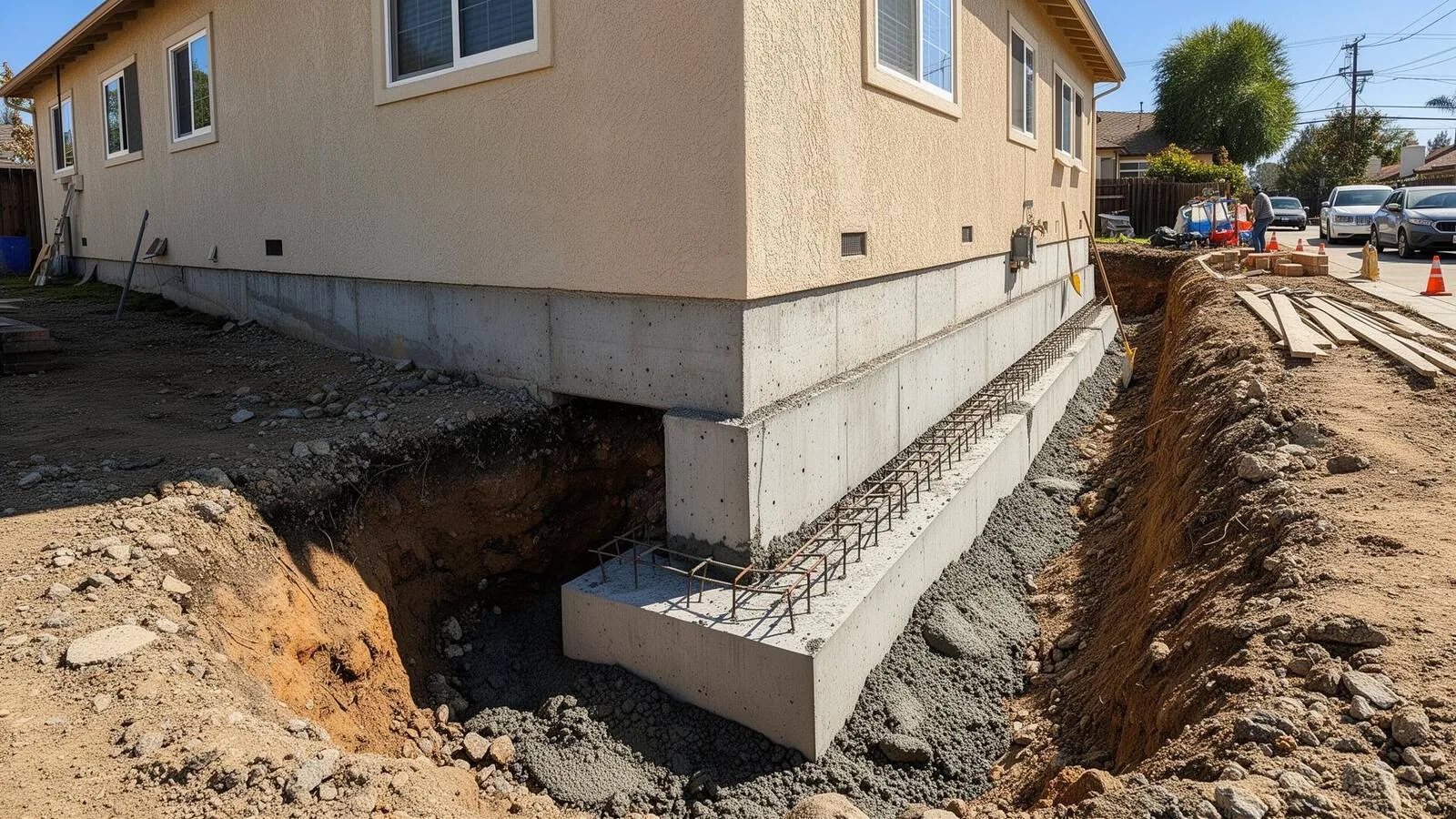
Foundation repair stabilizes, reinforces, or restores an existing foundation. This can include crack repair, underpinning, sister foundations, drainage corrections, and partial rebuilds.
Foundation replacement removes the existing foundation and installs a new one — usually because the existing foundation can no longer be made reliable, or because the cost of repair approaches the cost of replacement.
Severity levels to think about
A simple way to think about severity:
- Minor: small cracks, isolated settlement, no active movement — often repairable
- Moderate: larger cracks, drainage-related damage, partial settlement — typically repairable with targeted work
- Severe: widespread deterioration, repeated failure, major movement, or compromised reinforcement — replacement may be the better long-term choice
Cost considerations
Repair is usually less invasive and less expensive in the short term. Replacement is a larger investment but resets the structural life of the foundation.
Cost is not the only factor. Site access, soil and drainage conditions, the age and type of the existing foundation, and what the home is built to support all matter.
Why a professional evaluation matters
Two foundations with similar-looking cracks can need very different solutions. An on-site evaluation looks at the structure, the soil, the drainage, and the surrounding site conditions before recommending repair, partial replacement, or full replacement.
A good contractor will explain the reasoning, the trade-offs, and the long-term outlook in plain language — not just hand you a price.