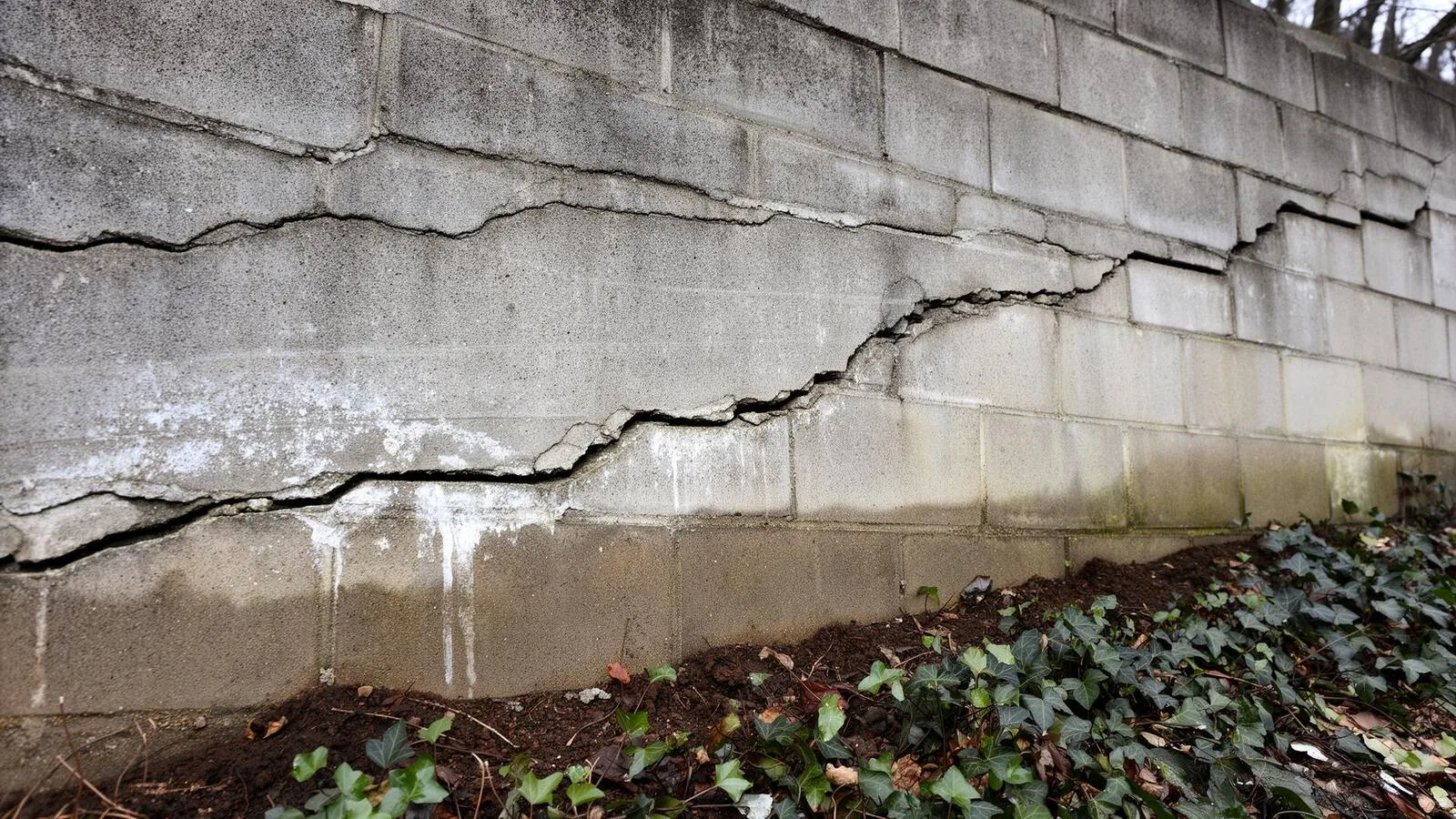
Spalling — concrete that flakes, chips, or crumbles — is one of the most common forms of concrete damage on Los Angeles homes. It often shows up on driveways, garage floors, walkways, exterior walls, and exposed footings.
Left alone, spalling almost always gets worse, because the underlying cause is moisture moving in and out of the concrete.
Moisture damage
Concrete is porous. When water repeatedly enters the surface and then evaporates — or freezes and expands during cool Los Angeles nights — it breaks the surface apart layer by layer.
Sprinklers spraying directly onto walls, leaking downspouts, and poor drainage are common contributors.
Rusting reinforcement
Most structural concrete has steel rebar inside it. When water reaches that steel, the rebar rusts and expands, pushing the surrounding concrete outward. Telltale signs include rust stains on the surface and chunks of concrete popping off to expose orange-colored steel.
This type of spalling is structural, not cosmetic, and should be repaired promptly.
Surface deterioration over time
Older concrete may simply wear down — especially if it was finished thin, exposed to salts, or built with limited cover over the reinforcement. UV, weather, and chemical exposure all play a role.
The repair process
A proper spalling repair typically involves:
- Removing all loose and unsound concrete back to a solid edge
- Cleaning and, if needed, treating exposed reinforcement
- Applying a bonding agent and a compatible structural repair mortar
- Addressing the moisture source so the repair lasts
When to replace instead of repair
If spalling covers a large area, recurs after repair, or appears alongside cracks and movement, replacement of the affected section may be the better long-term solution.